
Indian employers have robust hiring intentions for the next three months, with 49 per cent of companies planning to add more staff in the January-March quarter, as employers are positive about achieving sustained post-pandemic recovery, a survey said on Tuesday. According to the latest ManpowerGroup Employment Outlook Survey, hiring sentiment in India is the strongest reported in eight years, improving by five percentage points in comparison with the prior quarter and by 43 percentage points when compared with this time one year ago. The survey of 3,020 employers noted that 64 per cent expect to increase their staffing levels, 15 per cent anticipate a decrease and 20 per cent do not anticipate any change, resulting in a seasonally adjusted Net Employment Outlook of 49 per cent.

Investors became poorer by over Rs 4.47 lakh crore on Friday as markets faced severe drubbing, mirroring weak trends in global equities. The 30-share BSE benchmark dived 866.65 points or 1.56 per cent to settle at 54,835.58. During the day, it tumbled 1,115.48 points or 2 per cent to 54,586.75.
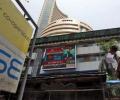
TCS was the top gainer in the Sensex pack, rising over 1 per cent, followed by Infosys, Reliance Industries, HUL, Nestle India and ITC. NSE Nifty ended 10.05 points higher at its new closing record of 16,634.65.

The government has invited applications for the post of chief economic adviser (CEA) to replace K V Subramanian, who will complete his three-year tenure next month. Subramanian was appointed as CEA on December 7, 2018, while he assumed charge on December 24 in the same year. As per the public notice dated October 24, 2021 issued by Department of Economic Affairs, the Ministry of Finance, officer of central, state governments, RBI and public sector banks holding analogous post on regular basis in parent cadres or department are eligible to apply for the post.

Reliance Industries Ltd will acquire German firm Metro AG's wholesale operations in India for Rs 2,850 crore as the conglomerate run by billionaire Mukesh Ambani seeks to strengthen its dominant position in India's mammoth retail sector. "Reliance Retail Ventures Limited (RRVL), a subsidiary of Reliance Industries Ltd, signed definitive agreements to acquire a 100 per cent equity stake in Metro Cash & Carry India for a total cash consideration of Rs 2,850 crore, subject to closing adjustments," said a joint statement. Through this acquisition, Reliance Retail will get access to a network of Metro India stores located in prime locations across key cities, along with a large base of registered kiranas and other institutional customers, and a strong supplier network.

The prominent faces among the 676 candidates for 57 seats spread across 10 districts in this phase included Chief Minister Yogi Adityanath from Gorakhpur Urban and state Congress president Ajay Kumar Lallu from Tamkuhi Raj.

ICICI Bank was the top loser in the Sensex pack, shedding nearly 2 per cent, followed by UltraTech Cement, Asian Paints, ITC, Kotak Bank, Axis Bank and PowerGrid.

In absolute numbers, India had only 211 start-ups compared to 970 in the US.

Shares of Yes Bank may face selling pressure as the Reserve Bank-mandated three-year lock-in period for individual investors and exchange-traded funds is ending on Monday, according to analysts. The analysts expect distress on the bank counter on Monday as they expect investors, primarily the nine banks led by State Bank, which picked up almost 49 per cent of its stocks in March 2020 for Rs 10 per share -- at a premium of Rs 8 on the face value as part of the RBI bailout, making an exit. Exchange-traded funds are also likely to press the exit button.

Hindustan Zinc (HZL), a subsidiary of Vedanta, announced an interim dividend of Rs 21 per share last week, resulting in an outflow of Rs 8,863 crore. The announcement has turned the spotlight on India Inc's dividend-paying policy - more so for reasons driving the generosity of firms. An analysis of BSE 500 companies by Business Standard Research Bureau shows that some of the top 20 dividend-paying companies in 2021-22 (FY22) include Vedanta, Tata Consultancy Services, HZL, Oil and Natural Gas Corporation (ONGC), Indian Oil Corporation (IndianOil), Hindustan Unilever (HUL), Reliance Industries (RIL), and Bajaj Auto, among others.

Equity indices gave up early gains to close in the red for the third session on the trot on Wednesday, weighed by selling in banking and finance counters amid inflationary pressures and persistent foreign fund outflows. A weak rupee and lacklustre global cues also kept buying sentiment in check, traders said. The 30-share BSE Sensex opened on a firm footing but failed to hold on the momentum, finishing 237.44 points or 0.41 per cent lower at 58,338.93. On similar lines, the broader NSE Nifty dipped 54.65 points or 0.31 per cent to close at 17,475.65.

The top-100 wealth creators generated Rs 49 lakh crore during 2014-19, the highest-ever quantum of wealth added, according to Motilal Oswal's Annual Wealth Creation Study 2019. According to the study, Reliance Industries, Indiabulls Ventures and IndusInd Bank are the biggest, fastest and most-consistent wealth creators, respectively. The number of PSUs in the top-100 wealth creators is only nine, namely IOC, BPCL, HPCL, Power Grid Corporation, Petronet LNG, Indraprastha Gas, LIC Housing, Bharat Electronics and NBCC.

A yellow glow is likely to stand out amid grey geopolitical clouds in 2023, with gold price projected to touch Rs 60,000 per 10 grams in the Indian market as more investors veer towards safe-haven assets. In a year where volatility was more a norm than an exception, gold prices in the international market oscillated from a peak of $2,070 per ounce in March to a low of $1,616 per ounce in November and is steadily recovering since then, according to market experts. At the beginning of 2022, gold prices were around $1,800 an ounce.

The country's exports jumped by 60.29 per cent to $34.45 billion in March even as the outbound shipments contracted by 7.26 per cent during the full 2020-21 fiscal to $290.63 billion. Imports too grew by 53.74 per cent to $48.38 billion in March, but dipped by 18 per cent to $389.18 billion during April-March 2020-21, according to the government data released on Thursday. Trade deficit during March 2021 widened to $13.93 billion from $9.98 billion in March 2020.

As the Indian currency hovers around its lowest versus the US greenback, several smaller and mid-sized companies are expected to face rough weather as almost 44 per cent of the foreign loans taken by Indian companies remained unhedged. According to the data sourced from the Reserve Bank of India, Indian companies raised around $38.2 billion in the financial year ended in March. Of this, only 56 per cent of the loans are hedged while the rest of the foreign loans remain unhedged, thus risking the companies to forex volatility.

The country's exports grew by 47.19 per cent to $35.17 billion on account of healthy growth in the outbound shipments of petroleum, engineering, and gems and jewellery, according to the provisional data of the commerce ministry. Imports during the month also rose by 59.38 per cent to $46.40 billion, leaving a trade deficit of $11.23 billion. Exports of petroleum, engineering, and gems and jewellery in July increased to $3.82 billion, $2.82 billion and $1.95 billion respectively, the data showed.

To educate customers on the modus operandi of financial fraudsters and share inputs on safe banking habits, banks are now coming up with awareness campaigns aimed at preventing customers from falling into the trap of fraudsters.

A greater payment security mechanism for power generation companies to ensure timely payouts for supply of electricity will be in focus in 2022 as stricter rules are on the anvil for 24x7 power supply amid discoms' outstanding dues at a whopping Rs 1.56 lakh crore. Mounting outstanding dues of distribution companies (discoms) to electricity generation companies (gencos) have been a perennial issue affecting the entire value chain in the power sector and are also a hindrance for the ambitious goal of 24x7 power supply across the country even when the payment for coal is made in advance. The situation persists despite the fact that discoms' dues become overdue after 45 days of generating bills and they also have to pay penal interest on the overdue amount in most of the cases to gencos.

Benchmark stock indices Sensex and Nifty tumbled nearly 1 per cent on Wednesday due to profit booking in banking, financial and IT stocks after a recent rally. The 30-share BSE Sensex plunged 537.22 points or 0.94 per cent to end at 56,819.39 as 24 of its stocks declined. During the day, it tanked 772.57 points or 1.34 per cent to touch a low of 56,584.04. The broader NSE Nifty declined by 162.40 points or 0.94 per cent to 17,038.40 with 39 of its constituents ending in the red. Bajaj Finance was the biggest loser among Sensex stocks, dropping by 7.24 per cent.


Around 75 per cent, or 372 stocks, that are part of the BSE500 are trading at least 10 per cent below their all-time high levels, despite the index hitting a record high 20,515 points on the BSE in intra-day trade on Wednesday, surpassing its previous high of 20,390 touched in March 12. The index, which accounts for 93 per cent of BSE listed companies' market capitalisation, has gained 8 per cent from its recent low of 18,983, touched on April 19. In comparison, the benchmark S&P BSE Sensex gained 6 per cent over the same period, but is still nearly 4.5 per cent away from its all-time high of 52,517 that it hit on February 16.

The Indian IT services sector is scrambling to retain talent since digitisation-led transformation has increased the demand for a digitally skilled workforce. As a result, the pull for jobs for tech professionals is also coming from non-IT sectors, leading to higher attrition among IT companies. The average number of tech jobs from non-IT sectors has seen a 41 per cent uptick in March-May'21 versus March-May'19, according to data from Naukri.com.

Collectively, the pack of 12 has posted a 50 per cent rise in profits -- Rs 25,685 crore. On a quarter-on-quarter basis (that is, September over June), the rise is 68 per cent. Public sector banks have never had such a stellar performance, explains Tamal Bandyopadhyay.

The most visible and immediate impact of COVID-19 is seen in the hotel and tourism sector in all its geographical segments - inbound, outbound and domestic.

Just 14 companies raised Rs 35,456 crore through main-board primary share sales in the first half of the fiscal, down 32 per cent from the year-ago period when 25 issues had mopped up Rs 51,979 crore. But according to Prime Database, the IPO pipeline is strong with 71 issues worth Rs 1,05,000 crore having Sebi approvals and another 43 worth about Rs 70,000 crore are awaiting approval. Of these 114 planned issues, 10 are new-age tech companies, which are looking to raise roughly Rs 35,000 crore.

Mirroring the increase in the earnings of their companies, the chief executives and promoters of India's top listed firms gained handsomely from the boom last financial year. Their remuneration includes salaries, perquisites or perks, and profit-linked commissions.

A total of Rs 52,759 crore has been raised by 61 companies through initial public offers till October this fiscal, higher than the funds mopped up through this route in the last financial year, the government told the Lok Sabha on Monday. Out of the 61 companies that hit the markets till October of the current fiscal, 34 entities were Small and Medium Enterprises (SMEs). Finance Minister Nirmala Sitharaman said that a large number of manufacturing and service sector companies are coming up for listing.

They will not be followed by analysts and no fund manager can buy such small companies with low trading liquidity.
Large companies, those that are talked about in the media and tracked on social media, have already been discovered. They won't lead to extraordinary gains, Debashish Basu points out.

The NCEAR has indicated some improvement in the fourth quarter of the current financial year.
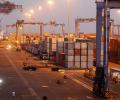
After recording positive growth for two months in a row, India's exports dipped marginally by 0.25 per cent to $27.67 billion in February and trade deficit widened to $12.88 billion, according to preliminary data released by the government on Tuesday. Imports grew 6.98 per cent to $40.55 billion during the month, the data showed. The trade deficit stood at $10.16 billion in February 2020. Exports during April-February 2020-21 were $255.92 billion, compared with $291.87 billion during the same period of last year, exhibiting a negative growth of 12.32 per cent.

The Indian troops guarding the nearly 3,500-km Line of Actual Control (LAC) maintained an assertive approach in sync with the broader national security doctrine and procured a variety of military platforms and weapons to enhance their combat capabilities.

China's economy grew by 8.1 per cent in 2021 to about $18 trillion despite challenges, including epidemic resurgences and a complicated external environment, the government said on Monday. According to the official figures released by the National Bureau of Statistics (NBS), China's economy grew by four per cent in the fourth quarter of last year, slowing from the 4.9 per cent growth in the third quarter, rounding off the full year's growth rate to 8.1 per cent in 2021. The GDP increase is also above the six per cent target set by the government for the year.

Indian Oil Corporation (IOC), the nation's biggest oil firm, on Tuesday reported a 31.4 per cent drop in the fourth quarter net profit as record refining margins were wiped away by a margin squeeze in petrochemicals and losses on auto fuel sales. Standalone net profit of Rs 6,021.88 crore, or Rs 6.56 a share, in January-March, compared with Rs 8,781.30 crore, or Rs 9.56 per share, in the same period a year back, the company said in a stock exchange filing. Sequentially, the profit was higher than Rs 5,860.80 crore in the previous quarter.

The failure of SVB was due to idiosyncratic reasons, but shows how higher rates can expose fault lines in unforeseen places, observes Neelkanth Mishra.

Industrial production re-entered the negative territory by contracting 1.6 per cent in January, mainly on account of the decline in output of capital goods, manufacturing and mining sectors. The output of the manufacturing sector -- which constitutes 77.6 per cent of the Index of Industrial Production (IIP) -- shrank by 2 per cent in January, as against a growth of 1.8 per cent during the same month last fiscal, as per data released by the government on Friday. The worst performance was witnessed by the capital goods sector, which recorded a contraction of 9.6 per cent during the month under review, compared to a 4.4 per cent decline a year ago.

Hiring for management professionals with greater than 16 years of experience witnessed a spike of 66% compared to last year.

The seasonally adjusted IHS Markit India Manufacturing Purchasing Managers' Index (PMI) fell from 58.9 in October to a three-month low of 56.3 in November, indicating that the manufacturing sector growth remained strong, despite losing traction.

The labour-intensive sector contributes about 15 per cent of the country's overall exports.

The deal street has come out of the record lows in the pandemic-washed out June quarter with transaction value growing almost 6 per cent to $21.64 billion in the July-September quarter, thanks to a string of equity sales by Reliance in its telecom and retail arms, says a report.

This is following revival of demand from the corporate sector and small and medium enterprises (SMEs), even as a nascent economic recovery is taking shape. Credit growth of scheduled commercial banks had accelerated to 9.2 per cent year-on-year (YoY) by the end of December 2021 after breaching the 7 per cent-mark in November, for the first time since April 2020.
